Medical costs—past and future
Emergency care, hospitalization, surgery, follow-up visits, medications, rehabilitation, and projected future treatment when the injury will not fully resolve.
Trucking evidence can disappear quickly after a collision. If you were hit by an 18-wheeler, you need a legal team that can secure trucking evidence quickly, deal directly with insurers, and build a damages case that reflects the full cost of your injuries.
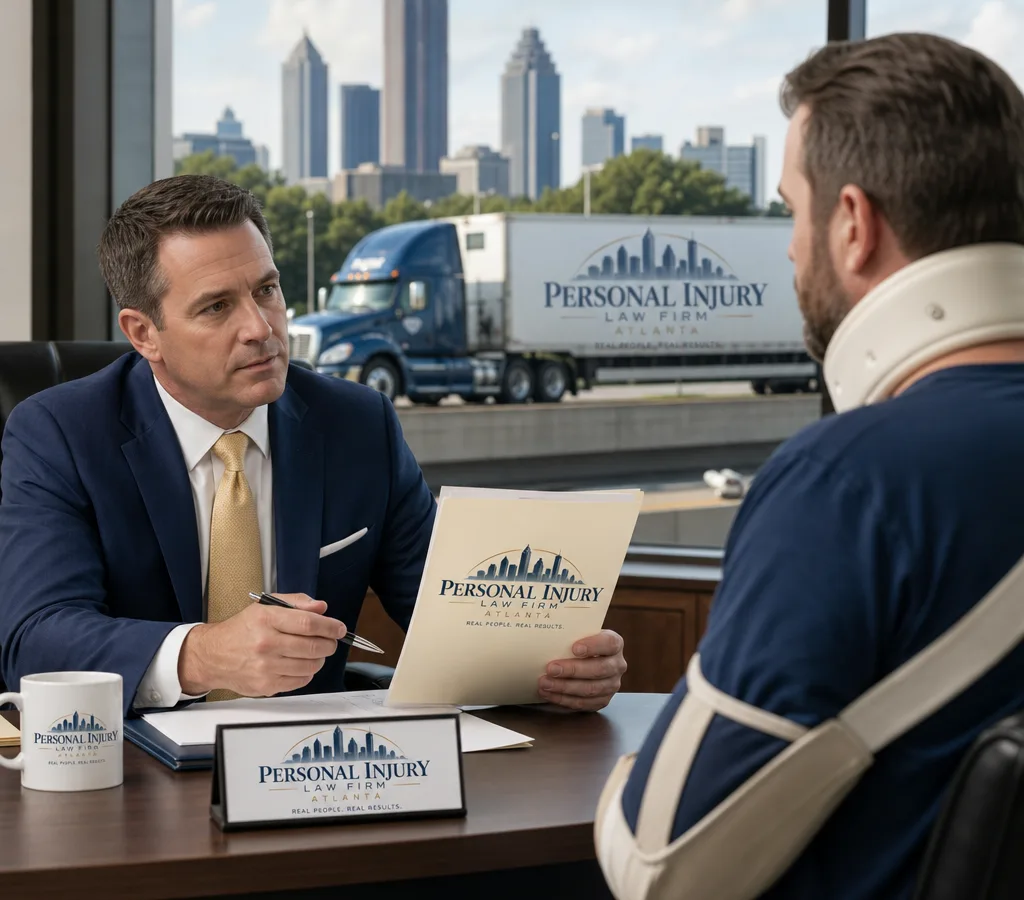
A semi truck crash is rarely a simple two-driver dispute. It often involves a commercial motor carrier, a professional driver, a trailer owner, a freight broker or shipper, and multiple insurance policies. An Atlanta semi truck accident lawyer focuses on the evidence and rules that control trucking cases so the claim is not reduced to a quick, incomplete payout.
Key differences in truck cases include:
Personal Injury Law Firm Atlanta represents people hurt in truck crashes across Atlanta, Georgia. Truck cases require a broader injury strategy that accounts for commercial records, multiple responsible parties, and the long-term effect of serious injuries.
After a serious truck crash, the first week can shape the whole case. Insurance adjusters may ask for a recorded statement, request broad medical authorizations, or push early settlement conversations before the injury picture is clear.
Our approach is built around securing proof and reducing the ways your claim can be minimized:
Truck crashes around central Atlanta often involve complex traffic patterns near major corridors. Near Downtown connectors and busy freight routes, witness availability and video sources can change quickly, making prompt investigation especially important.

Emergency care, hospitalization, surgery, follow-up visits, medications, rehabilitation, and projected future treatment when the injury will not fully resolve.
Time missed from work now and reduced ability to earn later, supported by pay records, job duties, and the medical restrictions that affect your role.
The effect the injury has on sleep, mobility, driving, family responsibilities, and normal activities, backed by medical notes and consistent reporting.
Vehicle damage and related expenses tied to the crash, documented with repair estimates, receipts, and replacement costs where appropriate.
When a semi truck crash causes a fatality, we guide families through a claim focused on the losses Georgia law allows and the evidence needed to prove them.
Location affects evidence, liability arguments, and which documentation becomes most important.
We do not treat these as generic wrecks. A trucking claim needs a case theory that matches what happened on that roadway, followed by the evidence required to prove it.
We start by understanding the injuries, the crash facts, and what evidence is at risk. We also flag urgent issues such as medical billing pressure and time away from work.
We pursue driver and carrier records, identify potential video sources, analyze the crash report and scene details, and develop a liability plan based on the trucking operation involved.
We organize medical proof, track treatment progress, and document how the injury affects work and daily life. If future care is likely, we build that into the claim.
We present a supported demand package and negotiate with the insurers involved. In trucking cases, this often means addressing multiple layers of coverage and shifting defenses.
If the insurer will not make a reasonable offer, we prepare the case for court with the goal of proving liability and damages through credible, organized evidence.
If you were hurt in a tractor-trailer crash, a timely case review can help protect key trucking evidence and prevent early statements or paperwork from hurting your claim.
Get a Free Case ReviewAs soon as your immediate medical needs are stable, because trucking records and video can disappear quickly and early insurance communications can lock you into a version of events. Fast action is often the difference between proving what happened and arguing about it months later.
You can still have a viable claim even when fault is disputed, but the case needs stronger evidence and careful handling of statements and documentation. We focus on objective proof such as ELD data, inspection and maintenance records, and witness accounts to address blame-shifting.
Liability may extend beyond the driver to the motor carrier, a maintenance provider, a trailer owner, or parties involved in loading and dispatch, depending on the facts. The right defendants are identified by tracing control of the truck, trailer, driver, and job assignment through documents and testimony.
In many cases, giving a recorded statement to a commercial insurer early can create avoidable problems because the questions are designed to narrow or challenge your claim. It is usually safer to get legal guidance first so your account is accurate, complete, and supported by documentation.
Serious truck collisions often involve traumatic brain injuries, neck and back injuries, broken bones, internal injuries, and injuries that require surgery or long rehabilitation. The legal claim should be built around the specific diagnosis, treatment plan, and lasting limitations documented by your providers.
It depends on the severity of injury, the number of defendants and insurers, and whether the case must be litigated to reach a fair result. Many cases cannot be valued responsibly until treatment progress is clear and future care needs can be supported.
Bring any crash report information you have, photos or video from the scene, insurance details, medical discharge papers, and wage or work-status documentation. If you do not have everything, that is still fine; we can help identify and request the missing records.
Share what happened and what treatment you have had so far. We will explain the next steps for preserving trucking records, proving liability, and pursuing compensation that matches the real impact of the injury.