Preserving time-sensitive evidence
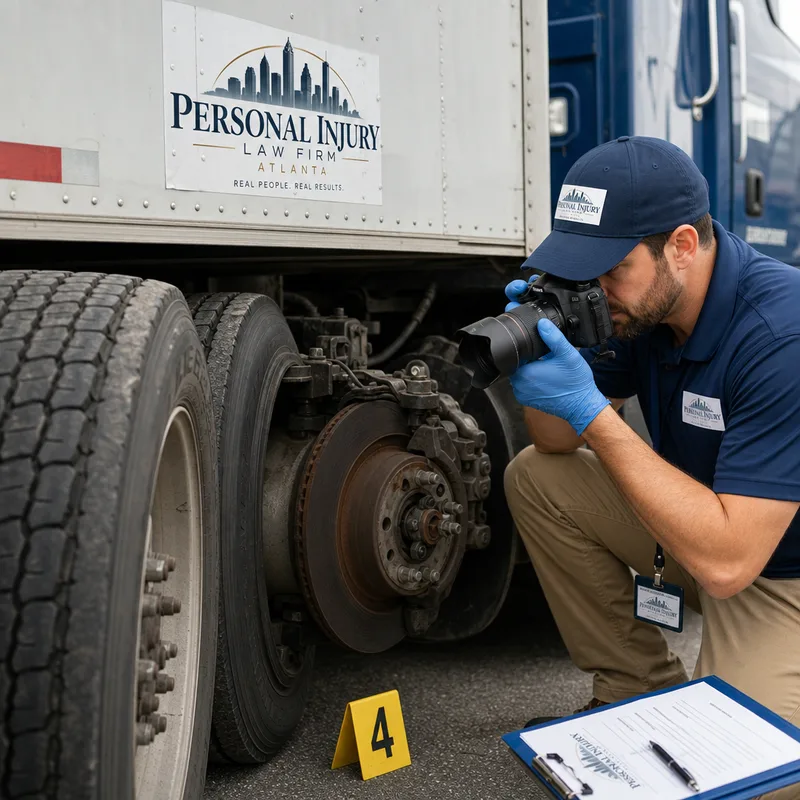
Trucking cases often turn on records that can be lost quickly: driver logs, onboard data, dispatch notes, load documents, maintenance history, and post-crash inspection reports.
If a commercial truck crash left you seriously hurt, we move fast to protect evidence. We deal with insurance and build a claim that reflects the real cost of your injuries.

A collision with an 18-wheeler can change everything in seconds. If you are searching for an Atlanta tractor-trailer accident lawyer, you likely need more than general advice. You need someone who understands how trucking claims work, what evidence disappears first, and how to push back when multiple insurers point fingers.
At Personal Injury Law Firm Atlanta, we handle tractor-trailer injury cases in and around Atlanta, GA. These cases are different from ordinary car wrecks because they often involve a commercial driver, a motor carrier, a trailer owner, a freight broker, a shipper, a maintenance vendor, and several insurance layers. Building a strong claim means identifying who had control over safety decisions, preserving records, and documenting the medical and financial impact of the crash.
Atlanta's major corridors like I-285, I-75, I-85, and I-20 bring heavy truck traffic through dense commuting patterns. When a crash happens, early steps matter: getting the right records, locating camera footage before it is overwritten, and keeping communications with adjusters from undermining your case.
Trucking cases often turn on records that can be lost quickly: driver logs, onboard data, dispatch notes, load documents, maintenance history, and post-crash inspection reports.
Responsibility may rest with more than the driver. We look at the motor carrier, equipment owners, maintenance contractors, cargo loading decisions, and policies that pushed unsafe scheduling.
Severe injuries bring long treatment plans, time away from work, and permanent limitations. We document the full picture, including future care needs when supported by the medical record.
Commercial insurers and defense teams often move fast to shape the narrative. We manage communications and negotiate from a position backed by facts, not assumptions.
Even when a claim resolves without trial, thorough preparation helps prevent low offers driven by missing documents or unanswered liability questions.
Tractor-trailer wrecks usually have a preventable cause. A strong investigation connects what happened on the roadway to the safety choices made before the collision.
Common issues we evaluate include:
An Atlanta tractor trailer accident lawyer should be ready to request and analyze trucking documents early, and to work with qualified experts when crash dynamics, visibility, or equipment condition is disputed.
We start by learning what happened, identifying known parties, and giving you a clear plan for next steps. When appropriate, we send preservation notices so key records are not lost.
We gather the crash report, witness information, photos, and available video sources. We also pursue trucking-specific records such as driver qualification files, inspection and maintenance logs, and cargo paperwork.
We organize your treatment timeline, diagnoses, restrictions, and how the injuries affect daily life and work. When future care is likely, we document what supports that projection.
We present a demand supported by evidence and handle negotiations with commercial carriers and insurers. If a fair resolution is not offered, we prepare to litigate and pursue discovery to obtain additional records.
Location can change the evidence and the story the defense tries to tell. A wreck on I-285 during stop-and-go traffic may involve chain-reaction impacts, while a collision on I-75 or I-85 can raise questions about speed, merging, and lane discipline.
We often see cases connected to:
We also pay attention to which agency investigated and what documentation exists. In the Atlanta area, crashes may be investigated by local police departments or the Georgia State Patrol depending on roadway and jurisdiction. The report is a starting point, not the finish line, especially when fault is disputed or injuries are severe.
If you were hurt in a tractor-trailer collision, get legal guidance early so evidence is preserved and you do not get boxed into a timeline or statement that helps the defense.
Get a Free Case ReviewGet medical care first and avoid giving recorded statements to any trucking or insurance representative until you understand your rights. If you can, take photos of vehicle positions, damage, company markings on the truck and trailer, and the surrounding roadway, then get witness contact information. In Atlanta, traffic-camera or nearby business footage may be overwritten quickly, so early action to preserve it can matter.
Liability can include the truck driver, the motor carrier, the trailer owner, a maintenance provider, and parties responsible for loading or securing cargo. The right defendants depend on who controlled the safety decisions that contributed to the crash, and what the records show about inspections, scheduling, training, and load conditions.
In Georgia, many personal injury claims are governed by a two-year statute of limitations, but deadlines can be shorter in special situations and evidence can disappear long before any filing deadline. A prompt legal review helps you protect the claim and avoid losing critical proof like logs, onboard data, and video.
A partial-fault argument is common in commercial truck cases, especially in lane-change, merge, and rear-end scenarios. The answer is evidence: scene documentation, witness accounts, vehicle damage patterns, and trucking records that show speed, braking, and driver duty status. We build the case around what can be proven, not what an adjuster suggests in an early conversation.
You can pursue damages tied to your medical expenses, lost income, reduced earning capacity, and pain and suffering, as supported by the facts of your case. In serious injury claims, documenting future medical needs and long-term limitations is often a major driver of value, so consistent treatment records and clear physician documentation matter.
Not always, but you should prepare as if you might. Many cases resolve through negotiation, but trucking defendants may refuse to pay fairly without a credible trial-ready case. Filing suit can also open formal discovery tools that help obtain internal safety and maintenance records that are not voluntarily produced.
Most injury firms handle tractor-trailer claims on a contingency fee, meaning the attorney fee is typically a percentage of a recovery rather than an hourly bill. The exact terms depend on the agreement, and you should ask how case costs are handled and how a fee changes if a case goes into litigation.
Yes. What matters most is where the crash occurred and which Georgia court has jurisdiction, not where you live now. We can often handle much of the process remotely while coordinating the records and documentation connected to the Atlanta-area collision.
Share what happened and what treatment you have received so far. We will outline the next steps, what evidence to preserve, and how an Atlanta-area tractor-trailer injury claim typically moves forward. You can also learn more about our team at Personal Injury Law Firm Atlanta.