Rapid evidence preservation
We move quickly to request crash reports, identify witnesses, and preserve time-sensitive proof like traffic or security footage when it may be available.
If you were hurt on a bike, you need a case built fast and backed by evidence. We handle insurance pressure, document your injuries, and pursue the full value of your claim so you can focus on recovery.
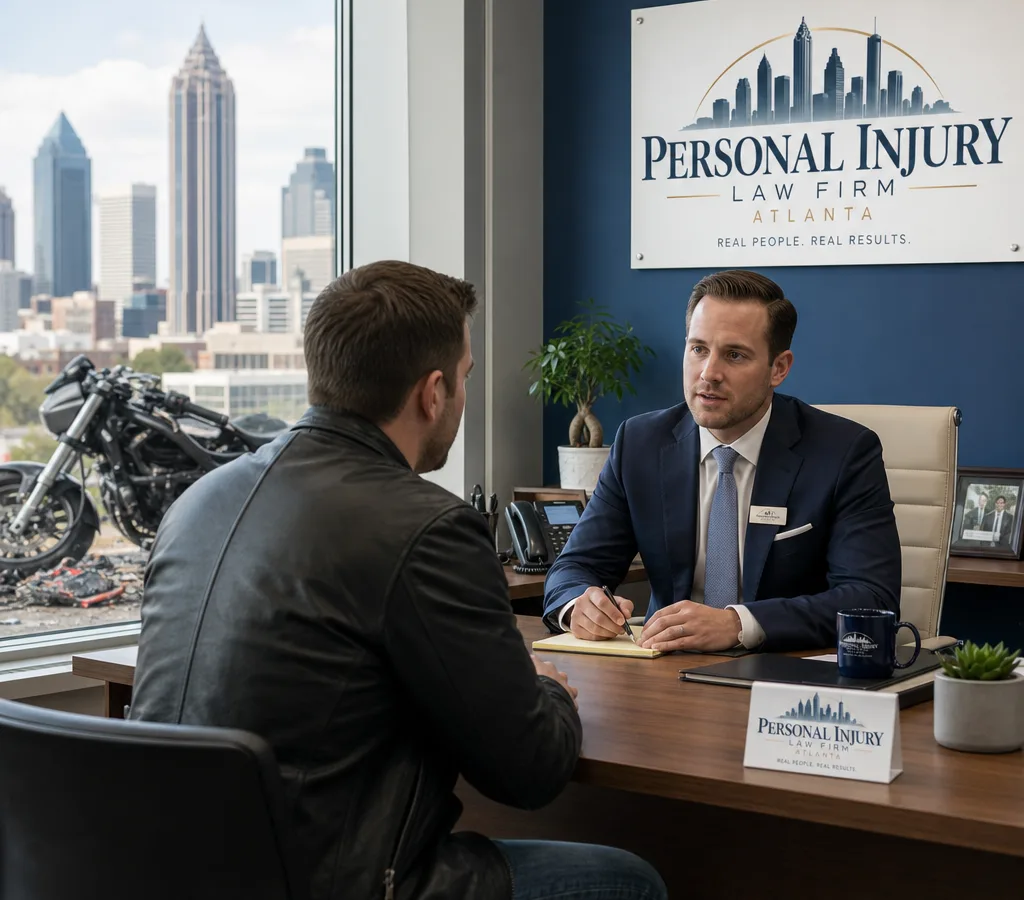
A motorcycle collision is rarely treated like a typical fender bender. Riders get blamed quickly, injuries are often severe, and the evidence can disappear within days. If you are searching for a motorcycle accident lawyer Atlanta GA, you are probably dealing with medical decisions, time off work, and an insurance adjuster who wants a recorded statement.
Our team at Personal Injury Law Firm Atlanta focuses on building motorcycle cases the way insurers evaluate them: with clear liability proof, consistent medical documentation, and a damages story supported by records. Many claims turn on details like sight lines at an intersection, lane positioning, conspicuity arguments, and whether the driver made an unsafe left turn.
Local context matters. Heavy commute corridors in Atlanta can produce multi-vehicle chain reactions and sudden lane changes, while complex interchanges and downtown traffic patterns can make it harder to identify every at-fault party. We build cases with the expectation that the insurer will look for any reason to discount the rider's injuries or shift blame.
If your crash happened in Midtown, the mix of dense traffic and frequent turns can make witness identification and camera footage a priority. In Buckhead, higher-speed surface streets often raise questions about impact severity and injury mechanisms. Downtown near the courthouse area, parking pull-outs and rideshare stops can create abrupt hazards that require careful scene reconstruction. In East Atlanta, narrower streets and mixed residential traffic often make visibility and right-of-way disputes central to the claim.
We move quickly to request crash reports, identify witnesses, and preserve time-sensitive proof like traffic or security footage when it may be available.
Your records drive your case value. We help you document symptoms, treatment, restrictions, and future care needs in a way that matches the legal proof required.
Recorded statements, early low offers, and blame shifting are common in rider claims. We manage communications and protect your case from avoidable pitfalls.
We pursue compensation for medical costs, lost income, reduced earning ability, pain and suffering, and the real day-to-day impact of your injuries.
Even when a case settles, preparation matters. We build your claim as if it could be tried, so the insurer sees credible risk in refusing fair value.
Insurance companies often approach rider claims with a built-in narrative: the motorcyclist was speeding, weaving, or hard to see. A strong Atlanta motorcycle accident lawyer counters that narrative with proof.
Here are issues we see repeatedly:
We also look for all potentially responsible parties. Depending on the facts, that can include multiple drivers, an employer if the at-fault driver was working, or other insurance coverages that apply to the collision.
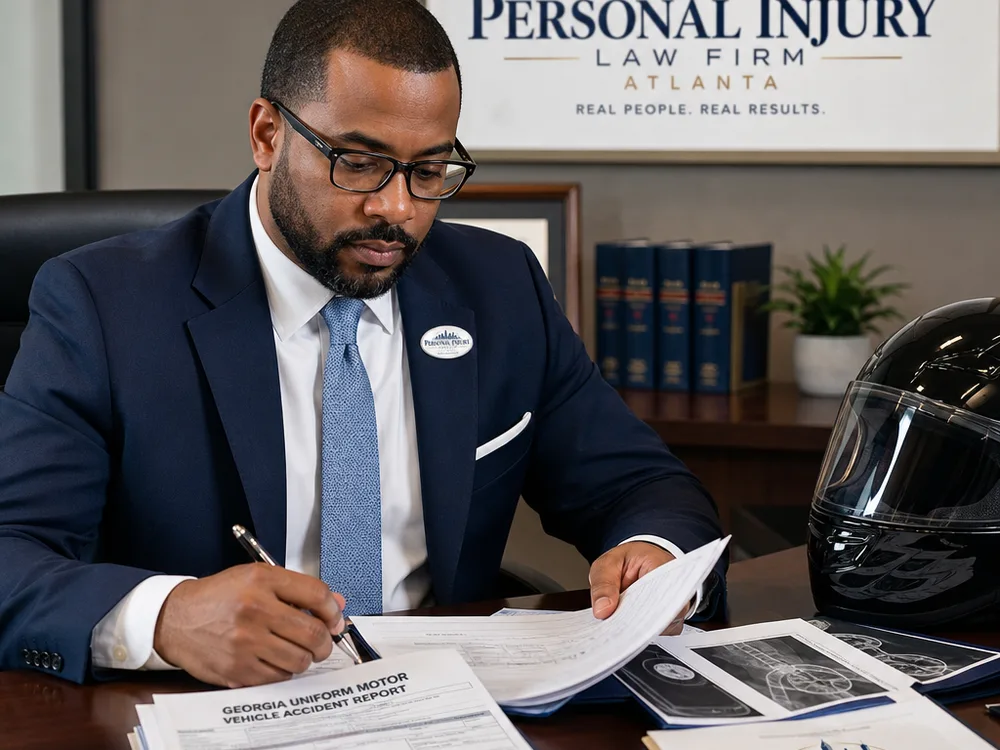
We start by learning how the crash happened, your injuries, and what the insurer has already requested. We identify deadlines and the evidence that needs to be secured first.
We gather the crash report, photos, witness statements, and any available video sources. When needed, we evaluate vehicle damage, scene geometry, and timing to explain fault clearly.
We track treatment, diagnoses, restrictions, and recovery progress. We also document wage loss and the ways your injuries affect work and daily life.
Once the evidence and treatment picture support a reliable valuation, we present a demand package and negotiate with the insurer based on provable damages and risk.
If the carrier will not offer fair compensation, we can file suit in the appropriate Georgia court and pursue discovery, depositions, and trial preparation.
Motorcycle injury cases often involve damages that grow over time, especially with fractures, surgeries, head injury symptoms, or chronic pain. The right value depends on your medical evidence and how clearly the case proves fault.
A claim may include:
A frequent problem is timing. Insurers often push an early settlement before the full injury picture is known. Once you sign a release, you usually cannot reopen the claim if symptoms worsen or you need additional procedures.
If you are comparing Atlanta motorcycle accident lawyers, ask how they evaluate future care needs and how they decide when the medical record is strong enough to negotiate. The answer should involve medical documentation, not guesses.
If an insurer is pressuring you or blaming you for the crash, get a legal review early. A clear strategy on evidence, treatment documentation, and damages can change the direction of the claim.
Call for a Free QuoteIn many Georgia injury cases, the deadline is two years from the date of the crash, but specific facts can shorten or change timelines. Evidence and witnesses also become harder to secure with time, so it is smart to get legal guidance well before any deadline is close.
You generally are not required to give the other driver's insurer a recorded statement, and doing so can harm your claim if you miss details or speculate. It is safer to have your attorney handle insurer communications so the facts are presented accurately and in context.
Fault is decided by evidence, not by the type of vehicle. A motorcycle accident lawyer in Atlanta can counter bias with objective proof such as point of impact, right-of-way rules, witness statements, and medical documentation tied to crash mechanics.
Possibly, yes. Georgia follows a modified comparative fault rule, which can reduce compensation based on your share of fault and can bar recovery if you are found 50% or more at fault. Because fault allocation drives case value, early evidence preservation and careful statements matter.
Cases involving surgery, fractures, traumatic brain injury symptoms, significant scarring, spinal injuries, or long-term work restrictions often require deeper documentation and expert support. The value still depends on provable fault and consistent medical records connecting the injury to the crash.
Bring any crash report information you have, photos or videos, insurance details, names of witnesses if known, and your medical discharge papers or treatment summaries. If you do not have everything, that is fine; we can often help obtain records, but the sooner we start, the easier it is to preserve time-sensitive proof.
Future care is typically supported through treating-provider opinions, medical records showing ongoing symptoms, and documentation of recommended follow-up care. The goal is to translate medical recommendations into a clear, defensible damages claim rather than relying on general estimates.
Share what happened in the crash and what treatment you have received so far. We will explain your options, the likely next steps with the insurer, and what evidence can strengthen your case.