Who controlled the property
Liability often turns on control. We work to identify the party responsible for inspections, cleaning, repairs, and safety policies, not just the business name on the door.
Evidence in a premises liability claim can disappear quickly. If you were hurt on someone else's property, we focus on fast investigation, clear proof of liability, and a damage plan that matches your medical reality.
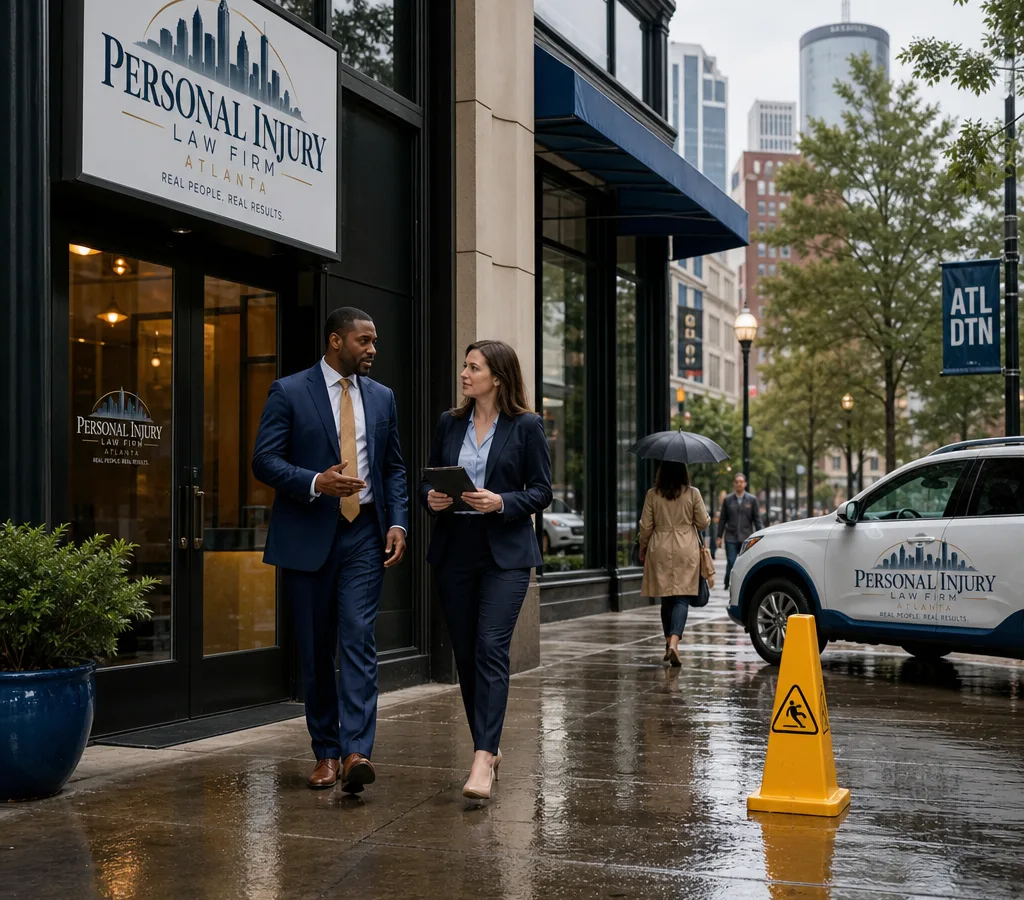
A slip and fall case is usually won or lost on evidence that disappears quickly. Slip and fall attorneys in Atlanta Georgia move early to preserve video, identify the right property owner or manager, document the hazard, and tie your injuries to the incident through medical records.
Our team at Personal Injury Law Firm Atlanta builds claims around the details that matter in Georgia premises liability cases: where you were allowed to be, what the owner knew or should have known, how long the hazard existed, and whether the owner took reasonable steps to fix it or warn people.
Common slip and fall scenarios we investigate in Atlanta include:
If your fall happened in a high-traffic area like Downtown near government buildings and large offices, surveillance footage can be critical but may be overwritten quickly. In neighborhoods with substantial retail foot traffic such as Midtown, ownership and management can be layered, making identification of the correct insurance policy a meaningful part of the case.
Georgia slip and fall claims typically come down to whether the property owner had actual or constructive knowledge of the hazard and whether you used ordinary care for your own safety. A solid investigation is how those concepts become evidence.
In practical terms, a slip and fall attorney in Atlanta may:
Atlanta's weather can affect these cases. Heavy rain makes entryways and parking lots slick, creating a predictable risk. The key legal question is not whether it rained, but whether the property was maintained and monitored reasonably for the conditions, including mats, signage, and inspection routines.
If you are comparing slip and fall lawyers in Atlanta GA, ask how they handle evidence preservation and how quickly they can start. Speed is often the difference between a disputed claim and a documented one.
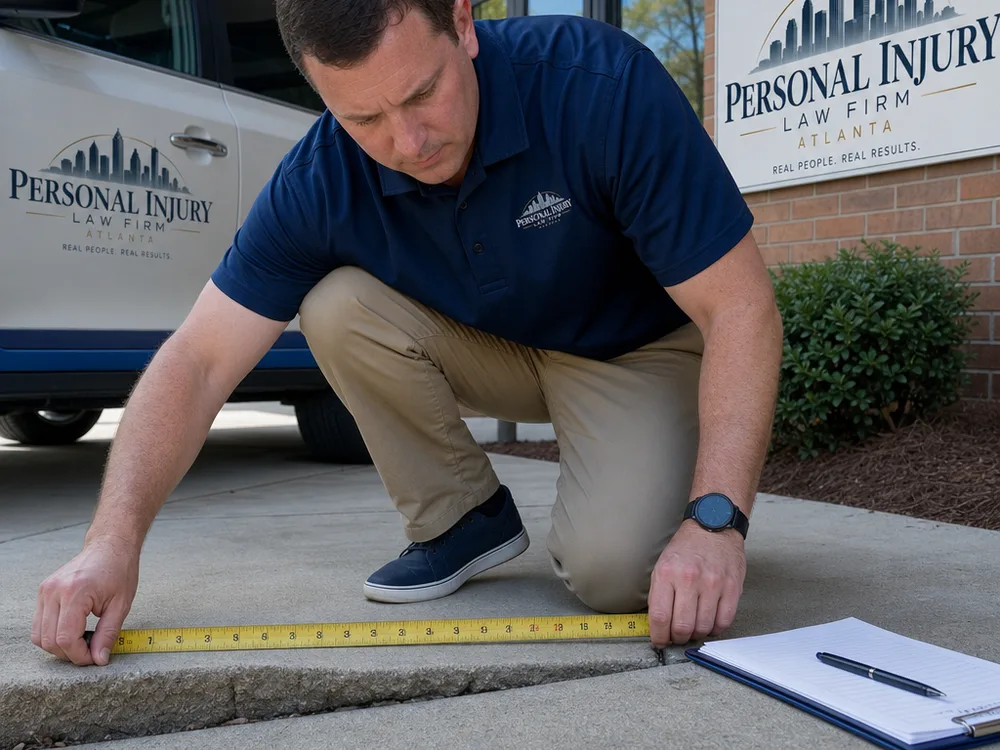
Liability often turns on control. We work to identify the party responsible for inspections, cleaning, repairs, and safety policies, not just the business name on the door.
Constructive notice can be proven when a dangerous condition existed long enough that reasonable inspections should have found it. Video, logs, and witness statements help establish timing.
Cones, signage, mats, lighting repairs, and blocked-off areas matter. We document what was present and what was missing at the time of the fall.
A claim is not only the ER visit. We build damages around the full medical course, work impact, and the practical limits the injury creates at home and on the job.
Insurers often seek early statements. We help you avoid misunderstandings that can be used later to argue fault or minimize the injury.
Every case is different, but the categories of damages in a premises liability claim are fairly consistent. A slip and fall attorney Atlanta clients trust will usually evaluate:
Falls often cause injuries that look minor at first and worsen over days. Head injuries, back injuries, and fractures can have delayed symptoms. If you have not been checked out, do that first. If another party's negligence appears to have contributed to the fall, gathering records early helps keep the case grounded in facts rather than competing stories.
If the fall happened at an apartment complex in an area like Buckhead, one challenge can be separating what is inside a unit from what the property controls in common areas such as stairwells, breezeways, and parking decks. In a busy commercial corridor like Midtown, footage may exist from multiple cameras, making identification of every relevant angle important.
We gather the time, location, what you were doing, what you saw, footwear and surface conditions, photos you have, witness names, and your medical status.
We move to preserve surveillance video and obtain incident reports where available, then document the scene and identify who had responsibility for maintenance and inspections.
We collect records and bills, track time missed from work, and document how the injury affects daily life so the claim reflects the full impact.
We present liability and damages with supporting documentation and negotiate with the insurer. If the carrier disputes fault or value, we prepare for litigation rather than guesswork.
If a fair resolution is not offered, we can file suit in the appropriate Georgia court and proceed through discovery, depositions, and case evaluation toward settlement or trial.
If you fell on a walkway, stairwell, or inside a business, the most useful next step is an attorney review while video and maintenance records still exist.
Get a Free Case Review“They told me exactly what would matter in a slip and fall claim and immediately asked about video and incident reports. That focus made the insurance conversations a lot less stressful.”
“I didn't realize the property manager and the business were different parties. They sorted out who was responsible and kept me updated without chasing them.”
Focused communication helps clients understand what evidence matters, who may be responsible, and how the claim is moving forward.
In many Georgia personal injury cases, the general deadline to file is two years from the date of injury, but shorter notice rules can apply in certain situations, and evidence can disappear long before any deadline. A quick legal review helps confirm the right timeline for your specific incident and preserves proof like video footage and maintenance records.
Report the fall and request an incident report, take photos or video of the hazard and surrounding area, get witness contact information, and seek medical care. If you can do it safely, document conditions that change fast, such as wet floors, missing mats, poor lighting, or broken handrails.
Yes, potentially. Georgia cases often involve arguments about ordinary care and whether the hazard was open and obvious, but those defenses are fact-specific and can be contested with evidence about lighting, distractions created by the property's layout, lack of warning, or how long the condition existed.
They can. A sign is not always enough if it was placed poorly, did not match the actual danger, was added after the fall, or the hazard was outside the warned area. Surveillance footage or witness testimony can help clarify what was present at the time.
These claims often turn on who controlled the area, whether the defect was unreasonable, and whether the owner had time to repair it or warn people. Parking lots and sidewalks can involve multiple responsible parties, so identifying ownership and maintenance responsibility is a key early step.
You are not required to guess or speculate on a recorded statement, and early statements are often used to argue you were at fault or not badly hurt. It is usually better to speak with an attorney first so your claim is presented accurately and supported by records.
Tell us where the fall happened and what injuries you are dealing with. We will outline what proof matters, who may be responsible, and the next steps to pursue compensation.